Chingu
What Does Chingu (친구) Mean? The Korean Word for Friend, Explained (2026)
What does chingu mean? 친구 (chingu) means 'friend' in Korean. Learn how Koreans use it, why age decides who counts as a chingu, related words like 남자친구 and 여사친, and how to say 'let's be friends.'

If you watch K-dramas or follow K-pop, you have probably heard chingu (친구) more times than you can count. It is one of the first Korean words most fans pick up, and it also happens to be the name of our app.
The quick answer: 친구 (chingu) means “friend.” But Koreans use it more narrowly than English speakers use “friend,” and that difference says a lot about Korean culture. Here is what chingu really means, how to use it, and the everyday words built from it.
Quick Answer: What Does Chingu Mean?
친구 (chingu) is the Korean word for friend. It is pronounced chin-goo.
- 친구 (chingu): friend
- 친구들 (chingudeul): friends
- 내 친구 (nae chingu): my friend
- 제 친구 (je chingu): my friend, said politely
- 친구야 (chinguya): “hey, friend,” used when talking to a friend directly
Who Counts as a 친구? Age Matters
In English, almost anyone can be your friend: a coworker ten years older, a neighbor, a classmate's dad. In Korean, 친구 usually means someone the same age as you, specifically someone born in the same year.
Korean even has a word for that: 동갑 (donggap), “the same age.” When two people find out they are 동갑, it often turns into an instant friendship, with a line like “우리 동갑이네! 친구 하자!” (“We're the same age! Let's be friends!”).
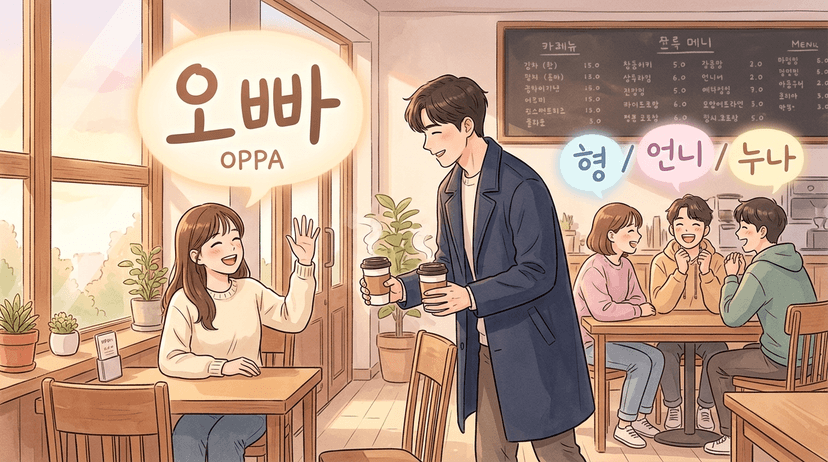
People older than you are usually not called 친구, even when you are close. Instead, you use a title that depends on your gender and theirs:
| If you are | Older man | Older woman |
|---|---|---|
| A woman | 오빠 (oppa) | 언니 (eonni) |
| A man | 형 (hyeong) | 누나 (nuna) |
Someone younger than you is your 동생 (dongsaeng). So where an English speaker says “she's my friend,” a Korean might say “she's an 언니 I'm close with.” For the full story on these titles, read our guide to what oppa means.
The rule is looser among younger Koreans and in international friendships, where 친구 gets used more freely. If you are not sure, asking someone's age, or the year they were born, is a normal part of getting to know people in Korea.
Everyday Words Built From 친구
남자친구 (namja chingu): boyfriend
Literally “male friend,” but it means boyfriend. In casual speech it shrinks to 남친 (namchin).
여자친구 (yeoja chingu): girlfriend
Literally “female friend,” meaning girlfriend. The short form is 여친 (yeochin). It is also the Korean name of the K-pop girl group GFRIEND.
남사친 and 여사친: just friends
Since 남자친구 already means boyfriend, Korean needed a way to say “a friend who happens to be a guy.” The answer is 남사친 (namsachin), short for 남자 사람 친구 (namja saram chingu), literally “male person friend.” The female version is 여사친 (yeosachin). Both mean a friend with no romance involved, at least officially. Plenty of K-drama plots start exactly there.
절친 (jeolchin): close friend
Short for 절친한 친구 (jeolchinhan chingu), a very close friend. You'll also hear 베프 (bepeu), borrowed from the English “best friend.”
단짝 (danjjak): inseparable friend
The friend you do everything with, often since childhood. Two 단짝 are the pair everyone mentions in the same breath.
동창 (dongchang): schoolmate
Someone who went to the same school as you. 초등학교 동창 (chodeunghakgyo dongchang) is a friend from elementary school, and 동창회 (dongchanghoe) is a class reunion.
How to Say “Let's Be Friends” in Korean
- 우리 친구 하자 (uri chingu haja): “Let's be friends.” Casual and very common.
- 친구 할래? (chingu hallae?): “Want to be friends?”
- 친구가 되고 싶어요 (chinguga doego sipeoyo): “I'd like to be your friend,” said politely.
- 말 놓을까요? (mal noeulkkayo?): “Shall we talk casually?”
That last one is the real turning point in a Korean friendship. New acquaintances speak politely, ending sentences with 요. Becoming friends usually means agreeing to switch to casual speech, called 반말 (banmal). Another common way to ask is 말 편하게 해도 돼요? (mal pyeonhage haedo dwaeyo?), “Is it okay if we talk comfortably?”
Example Sentences With 친구
- 얘는 제 친구예요. (yaeneun je chinguyeyo) This is my friend.
- 친구랑 영화 보러 가. (chingurang yeonghwa boreo ga) I'm going to see a movie with a friend.
- 우리 동갑이네! 친구 하자. (uri donggabine! chingu haja) We're the same age! Let's be friends.
- 남자친구 있어요? (namja chingu isseoyo?) Do you have a boyfriend?
- 걔는 그냥 여사친이야. (gyaeneun geunyang yeosachiniya) She's just a friend.
- 우리 오래된 친구잖아. (uri oraedoen chingujana) Come on, we're old friends.
Two small things worth noticing. 랑 (rang) means “with” in casual speech, so 친구랑 is “with a friend.” And 남자친구 있어요? is a surprisingly common question in Korea, often asked by aunts at family gatherings.
Chingu Spellings You'll See Online
- chingu, chingoo, chin-gu: all romanizations of the same word, 친구.
- 칭구 (chinggu): a cute, deliberately misspelled version used in texts and comments.
- 친구야 (chinguya): calling out to a friend, like “hey, buddy.”
If you are collecting words like this, our list of Korean words every K-pop fan should know covers the rest of the fandom vocabulary.
Why Our App Is Called Chingu
We named the app Chingu because a language sticks fastest when you practice it with someone you actually want to talk to. In Chingu, you pick an AI Korean friend, take a short lesson, then call them to practice. They speak first, remember what you talked about last time, and gently fix your mistakes, the way a good 친구 would.
And since a 친구 is someone on your level, your Korean friend adapts to yours, so every conversation meets you where you are. If you are just starting out, our guide to Korean greetings is a good first step.