Chingu
30 Korean Drama Phrases You Hear in Every K-Drama (2026)
The Korean phrases K-dramas use again and again, from 헐 and 말도 안 돼 to 가지 마 and 보고 싶었어. 30 K-drama phrases with Hangul, romanization, meaning, and the scenes where characters say them.

Watch enough K-dramas and you start hearing the same lines over and over. The shocked 헐. The whispered 가지 마. The 밥 먹었어? that has nothing to do with food. Before long you're catching them before the subtitles appear.
This list collects 30 phrases you'll hear in almost every K-drama, grouped by the kind of scene they show up in. Each one has the Hangul, the romanization, what it means, and when characters say it. Most dialogue in dramas is casual speech between people who are close, so where it matters, we've noted the polite version too.
Shock and Disbelief
1. 헐 (heol): What?! / OMG
The all-purpose reaction to anything shocking, unbelievable, or just a bit much. It started as internet slang and now comes out of every younger character's mouth. 헐, 진짜? means “What, seriously?”
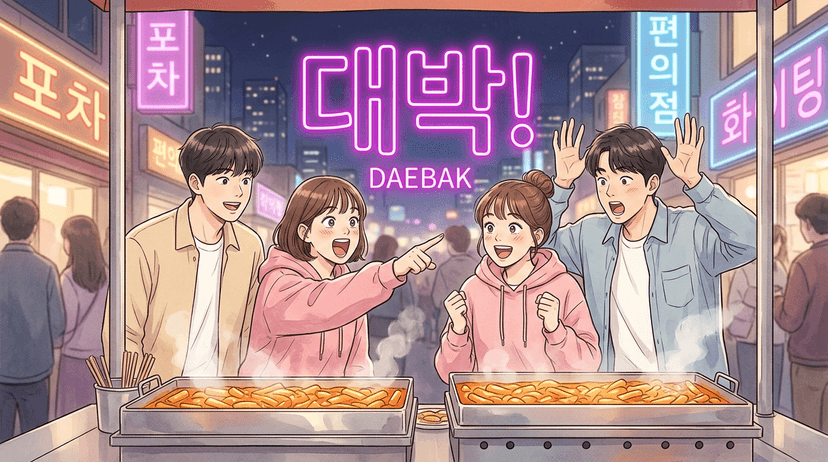
2. 대박 (daebak): No way! / Amazing!
For big surprises, usually good ones. A character who meets their idol or gets the job says 대박. Our full guide covers what daebak means and all the ways to use it.
3. 말도 안 돼 (maldo an dwae): That's impossible
Literally “it doesn't even make sense.” This is the line when a character hears news they refuse to accept: a breakup, a betrayal, or the reveal that the new chairman is their long-lost brother.
4. 진짜? (jinjja?): Really?
The simplest reaction in Korean. Said flatly, it means “really?” Said with a gasp, it means “you have to be kidding me.” 정말? (jeongmal?) means the same thing and sounds a little more serious.
5. 어떡해 (eotteokae): What do I do? / Oh no
Short for 어떻게 해, “how do I do this?” Characters say it when they panic, get embarrassed, or realize they sent a text to the wrong person. Repeated three times, 어떡해 어떡해 어떡해 is peak K-drama panic.
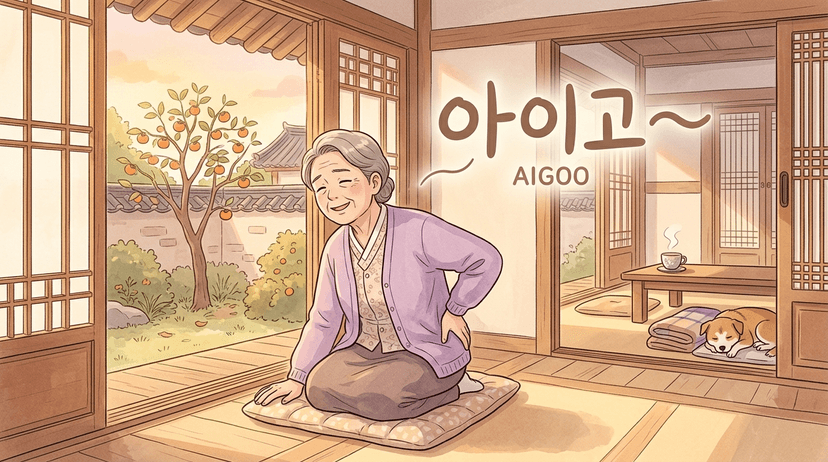
6. 아이고 (aigo): Oh dear
The sigh of tired parents, grandmothers, and anyone who just stubbed a toe. It can mean pain, frustration, sympathy, or relief, depending on the tone. See what aigoo means for every flavor of it.
Romance and Confessions
7. 좋아해 (joahae): I like you
The classic first confession. In dramas, 좋아해 often arrives many episodes before 사랑해, and it hits just as hard. The polite version is 좋아해요 (joahaeyo).
8. 사랑해 (saranghae): I love you
Saved for the big moment, usually late in the season. Our guide covers every way to say I love you in Korean, from casual to formal.
9. 보고 싶었어 (bogo sipeosseo): I missed you
The reunion line, said at airports, hospital beds, and rainy bus stops. The present tense, 보고 싶어, means “I miss you.” We break both down in how to say I miss you in Korean.
10. 가지 마 (gaji ma): Don't go
Usually said while grabbing someone's wrist. 가다 means “to go,” and -지 마 means “don't.” The same pattern gives you 울지 마 (ulji ma, don't cry) and 걱정하지 마 (geokjeonghaji ma, don't worry).
11. 나랑 사귈래? (narang sagwillae?): Will you go out with me?
사귀다 (sagwida) means “to date.” This is the official ask, and Korean couples often count their anniversaries from the day it gets a yes.
12. 너밖에 없어 (neobakke eopseo): You're the only one
Literally “there is no one but you.” It is deeply romantic in a confession scene, and friends also use it jokingly when one of them does a big favor.
13. 기다릴게 (gidarilge): I'll wait for you
The promise before a long separation: military service, studying abroad, or a two-year time skip. The -ㄹ게 ending turns a verb into a promise, “I will.”
14. 괜찮아? (gwaenchana?): Are you okay?
The line the second lead always says first. As a statement, 괜찮아 means “I'm fine” or “it's okay,” and characters say it most when they are clearly not fine.
Fights and Tension
15. 그만해 (geumanhae): Stop it
Said to end an argument, a prank, or a fight that is getting out of hand. When someone shouts it, the scene is about to turn.
16. 됐어 (dwaesseo): Forget it
Literally “it's done.” It can mean “that's enough,” “never mind,” or a cold “I don't need your help.” Tone is everything.
17. 왜 이래? (wae irae?): Why are you acting like this?
For when someone suddenly turns cold, strange, or angry. The polite form, 왜 이러세요? (wae ireoseyo?), is what a character says to a stranger who is making a scene.
18. 놔 (nwa): Let go!
Short for 놓아 (noa), from 놓다, “to let go.” Usually shouted at someone holding an arm in a hallway or a parking garage. The longer version is 이거 놔 (igeo nwa), “let go of me.”
19. 꺼져 (kkeojyeo): Get lost
Harsh and rude, roughly “get out of my sight.” Worth recognizing, not worth using.
20. 두고 봐 (dugo bwa): Just you wait
The revenge promise. Literally “leave it and watch,” meaning “you'll see what happens.” If a character says this in episode two, expect a payoff by episode twelve.
21. 감히 (gamhi): How dare you
A favorite of chaebol mothers and arrogant heirs. 감히 네가? (gamhi nega?) means “How dare you?” It sounds stiff and theatrical, which is exactly why you hear it far more on screen than in real life.
Everyday Lines You Hear in Every Episode
22. 밥 먹었어? (bap meogeosseo?): Have you eaten?
Literally “did you eat rice?” but it usually means “how are you?” or “I care about you.” When a drama character asks this, they are rarely asking about lunch.
23. 잠깐만 (jamkkanman): Wait a second
Said before a big reveal, a sudden kiss, or a dramatic exit. The polite version is 잠깐만요 (jamkkanmanyo).
24. 잘 자 (jal ja): Good night
Literally “sleep well,” and the end of every late-night phone call. With parents and elders, it becomes 안녕히 주무세요 (annyeonghi jumuseyo).
25. 화이팅 (hwaiting): You can do it!
From the English word “fighting,” this is the cheer before an exam, a job interview, or a hard day, usually with a raised fist.
26. 수고했어 (sugohaesseo): Good work today
Said at the end of a long day or a finished task, something like “you worked hard.” In office dramas you'll hear the polite form, 수고하셨습니다 (sugohasyeotseumnida).
27. 미안해 (mianhae): I'm sorry
Every drama has at least one tearful 미안해. For the polite and formal versions, see how to say sorry in Korean.
Names and Titles You Keep Hearing
28. 오빠 (oppa): Older brother, or boyfriend
What a woman calls an older man she is close to, from her actual brother to her boyfriend. The relationship decides the meaning. Read what oppa really means for the full picture.
29. 아저씨 (ajeossi): Mister
A middle-aged man, or any man a character wants to keep at a distance. A heroine calling the young male lead 아저씨 is a classic way to annoy him.
30. 회장님 (hoejangnim): Chairman
The head of the family company, and often the source of every problem. When someone says 회장님 in that tone, an inheritance is about to be in danger.
How to Learn Korean From K-Dramas
Dramas are one of the best listening resources there is, if you use them on purpose. A few habits make a big difference:
- Rewatch one scene, not one season. Pick a two-minute scene you love and watch it several times: first with English subtitles, then with Korean subtitles, then with none.
- Collect lines, not single words. Write down whole phrases like 가지 마 or 밥 먹었어? exactly as they are said. They are easier to remember, and you can use them as they are.
- Shadow the actors. Pause after a line and repeat it out loud, copying the rhythm and the emotion. Dramatic delivery is easy to imitate and great for pronunciation.
- Notice who is talking to whom. The same character says 미안해 to a friend and 죄송합니다 (joesonghamnida) to their boss. Every episode is a free lesson in when to be casual and when to be polite.
- Use the phrase within a day. Say it to someone, text it, or practice it in a call. Using a phrase is what moves it from “I recognize that” to “I can say that.”
How to Understand These Phrases Without Subtitles
Recognizing these phrases on a list is the first step. Catching them at full speed in the middle of an emotional scene takes listening practice, and the fastest way to get there is to hear real Korean said to you, then say it back.
That is the idea behind Chingu. You take a five-minute lesson, then call a Korean friend and practice it in a conversation, with subtitles when you need them. You can even play out scripted K-drama scenes, like morning coffee, a rainy confession, or the first snow, one line at a time.
Want more of the casual language characters use with their friends? Our guide to Korean slang words and phrases picks up where this list ends.