Chingu
How to Learn Korean: A Beginner's Complete Guide (2026)
A step-by-step guide to learning Korean from scratch. Learn Hangul, build vocabulary, understand grammar, and start speaking Korean with confidence.
Korean has become one of the most popular languages to learn worldwide, driven by the global wave of K-pop, K-dramas, and Korean culture. Whether you want to understand your favorite songs, travel to Seoul, or connect with Korean-speaking friends, this guide will walk you through everything you need to get started.
Why Learn Korean?
Beyond the cultural appeal, Korean is a gateway to one of the world’s most innovative economies. South Korea is home to global brands like Samsung, Hyundai, and LG. Learning Korean opens doors to career opportunities, deeper cultural understanding, and meaningful relationships with over 77 million native speakers worldwide.
Korean is also considered one of the more logical languages to learn. Unlike Chinese or Japanese, Korean has its own alphabet — Hangul — which was scientifically designed to be easy to learn. Most people can read Hangul within a few hours of study.
Step 1: Master Hangul (The Korean Alphabet)
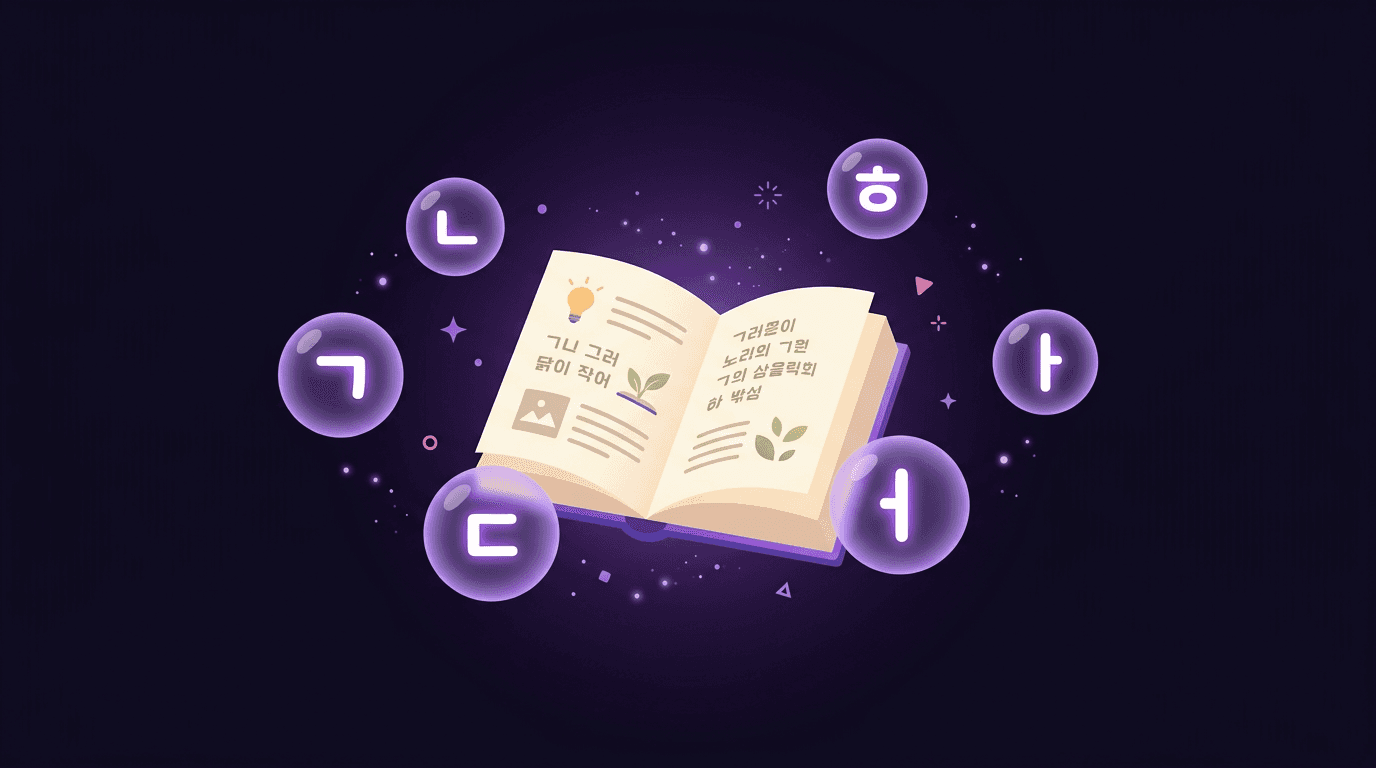
Hangul is the foundation of everything. Created in 1443 by King Sejong the Great, it was specifically designed so that common people could learn to read and write easily. The alphabet consists of 14 consonants and 10 vowels that combine into syllable blocks.
Here’s the good news: you can learn to read Hangul in a single afternoon. Don’t rely on romanization (writing Korean words in English letters) — it creates bad pronunciation habits and slows your progress. Start with Hangul from day one.
Key consonants to learn first: ㄱ (g/k), ㄴ (n), ㄷ (d/t), ㄹ (r/l), ㅁ (m), ㅂ (b/p), ㅅ (s), ㅇ (ng/silent), ㅈ (j), ㅎ (h)
Key vowels: ㅏ (a), ㅓ (eo), ㅗ (o), ㅜ (u), ㅡ (eu), ㅣ (i)
Step 2: Build Core Vocabulary
Once you can read Hangul, start building your vocabulary. Focus on the most frequently used words first. Research shows that knowing the 1,000 most common Korean words covers about 85% of everyday conversation.
Start with these categories:
- Greetings: 안녕하세요 (hello), 감사합니다 (thank you), 죄송합니다 (sorry)
- Self-introduction: 저는... (I am...), 이름 (name), 나이 (age)
- Daily life: 먹다 (eat), 가다 (go), 하다 (do), 보다 (see)
- Numbers: Korean has two number systems — native Korean and Sino-Korean. Learn both.
Use spaced repetition (SRS) flashcards to retain vocabulary long-term. The key is reviewing words at increasing intervals just before you’re about to forget them. Apps that use SRS algorithms are far more effective than traditional memorization.
Step 3: Understand Basic Grammar
Korean grammar is very different from English, but it follows consistent patterns. The basic sentence structure is Subject-Object-Verb (SOV), compared to English’s Subject-Verb-Object (SVO).
For example: “I eat rice” in Korean is “나는 밥을 먹어요” (I + rice + eat).
Essential grammar concepts for beginners:
- Particles: 은/는 (topic), 이/가 (subject), 을/를 (object), 에 (location/time)
- Verb conjugation: Korean verbs change based on formality level and tense
- Formality levels: Korean has multiple speech levels. Start with 존댓말 (polite/formal) using the -요 ending
- Connectors: 그리고 (and), 하지만 (but), 그래서 (so)
Step 4: Practice Speaking from Day One
This is where most learners make a critical mistake: they wait until they feel “ready” to speak. The truth is, you’ll never feel ready. Start speaking Korean from your very first day, even if it’s just reading Hangul out loud. Our Korean conversation practice tips go deeper into how to build this habit.
Conversation practice is the fastest way to improve because it forces your brain to recall vocabulary, apply grammar rules, and process Korean in real time. Even making mistakes is valuable — it helps your brain identify gaps in your knowledge.
Modern AI technology has made conversation practice more accessible than ever. AI conversation partners can chat with you in Korean, correct your mistakes in real time, and adapt to your skill level — all without the pressure of speaking with a real person.
Step 5: Immerse Yourself in Korean Media
Immersion accelerates learning dramatically. Here’s how to surround yourself with Korean:
- K-dramas: Start with Korean subtitles (not English). Even if you understand little at first, your brain is absorbing pronunciation patterns and common phrases.
- K-pop: Learn the lyrics to your favorite songs. Music helps with memorization and pronunciation.
- Podcasts: Listen to beginner Korean podcasts during commutes or workouts.
- Social media: Follow Korean accounts on Instagram and TikTok. Short-form content is great for picking up casual Korean.
Step 6: Use Technology to Accelerate Your Progress
The right tools can dramatically speed up your Korean learning journey. (For a detailed breakdown, see our comparison of the best Korean learning apps in 2026.) Here’s what to look for in a language learning app:
- Conversation practice: The most important feature. Look for apps that let you practice real conversations, not just multiple-choice quizzes.
- Real-time corrections: Getting feedback on your mistakes immediately is crucial for building correct habits.
- SRS flashcards: Spaced repetition is scientifically proven to be the most efficient way to retain vocabulary.
- Voice chat: Speaking practice is essential, and voice-enabled apps let you practice pronunciation anytime.
The best approach is combining multiple methods: use structured lessons for grammar, SRS for vocabulary, and conversation practice for fluency.
Common Mistakes to Avoid
- Relying on romanization: Learn Hangul first. Romanization gives you incorrect pronunciation.
- Only studying, never speaking: Balance input (reading/listening) with output (speaking/writing).
- Ignoring formality levels: Using the wrong speech level can be rude. Learn 존댓말 first.
- Trying to learn everything at once: Focus on the basics before moving to advanced grammar.
- Giving up too early: The first 3 months are the hardest. Push through and it gets easier.
How Long Does It Take to Learn Korean?
The US Foreign Service Institute (FSI) estimates that English speakers need about 2,200 hours of study to achieve professional proficiency in Korean. But for conversational fluency, most dedicated learners can hold basic conversations within 6-12 months.
The key factor isn’t time — it’s consistency. Studying 30 minutes every day is far more effective than cramming 3 hours on weekends. Build a daily habit, combine multiple learning methods, and most importantly, practice speaking as much as possible.
Your Korean learning journey starts with a single step. Pick up Hangul today, and you’ll be amazed at how quickly you progress.